Traces of the Cyrillic Script
(Archival Documents from Wallachia, 17th–19th Century)
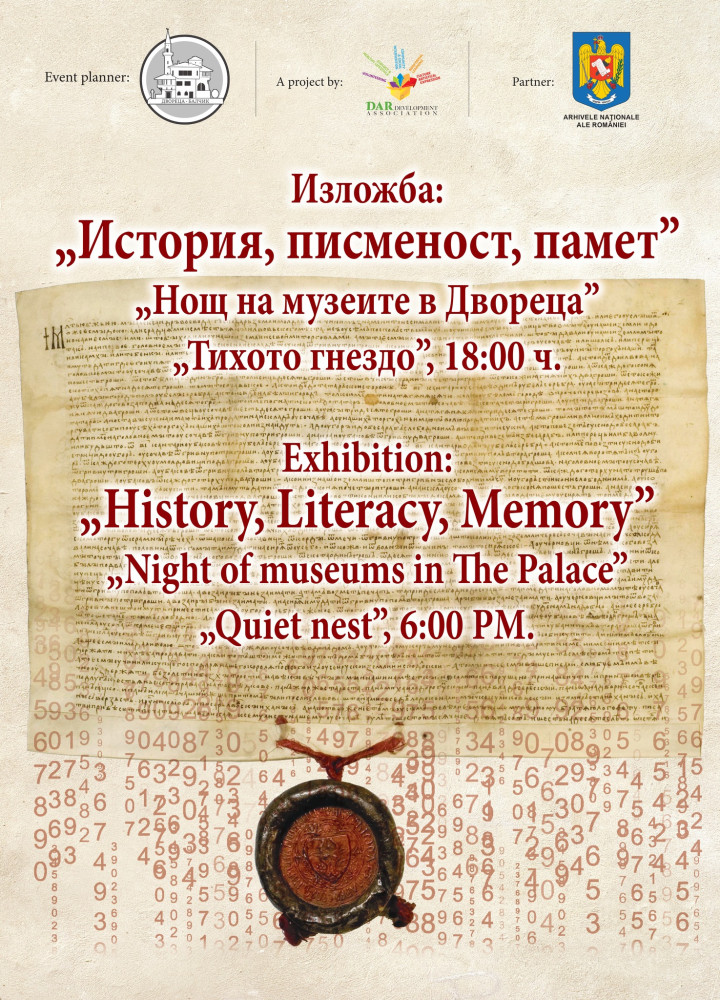
On 23 May, on the eve of the Day of Saints Cyril and Methodius, of the Bulgarian alphabet, education and culture, and of Slavic literature, State Cultural Institute Cultural Centre “The Palace” presents the exhibition “History, Script, Memory”, organised with the support of the National Archives of Romania.
The exhibition features reproductions of archival documents from the 17th to the 19th century connected to the work of the princely chancelleries in Wallachia — a world in which the Cyrillic script and the Church Slavonic literary tradition occupied an important place in the administrative, spiritual, and cultural life of the Balkans.
Visitors will have the opportunity to discover the richness of old manuscripts and charters through exquisite calligraphy, decorative ornaments, miniatures, seals, and symbols combining documentary and artistic value. Among the exhibits are also documents written in Ottoman Turkish using Arabic script, reflecting the multilingual and multicultural environment of the Balkans during that era.
The exhibition explores a lesser-known chapter in the history of the Cyrillic alphabet — its centuries-long presence in the lands of present-day Romania, where it remained in official use until the mid-19th century.
The selection of documents was prepared with the support of Dr. Claudiu Victor Turcitu, Head of the Medieval Archives Department at the National Archives of Romania, with particular emphasis placed on their decorative and visual qualities. The exhibition curator is Alexandra Brutaru, an art historian with a special interest in the ornamentation of chancery manuscripts. For this reason, the primary criterion for selecting the documents was their aesthetic value.
It is believed that throughout different historical periods, the Cyrillic script was used in more than 20 state and cultural formations, while today it remains an official alphabet in more than 10 countries.
Created more than a thousand years ago, the Cyrillic script continues to be a living writing system for over 250 million people around the world.
Free admission.